Meteor Scatter Observations
Meteor Scatter Observations in Berlin – Results from 2025 and 2026
Since 2025, we have been continuously monitoring meteor activity in Berlin using two 3-element Yagi antennas. One antenna is pointed south at an azimuth of 180° and an elevation of 20°, while the second is directed southwest at an azimuth of 220° and an elevation of 30°.
Our observations are based on the meteor scatter technique, using radio signals transmitted by the French GRAVES radar. When meteoroids enter the Earth’s atmosphere, they produce ionized trails that can reflect radio waves. By detecting these short-lived reflections, we can record meteor activity continuously, regardless of daylight or weather conditions.
For more information about the principles and methods of radio meteor observations, please visit section citizen science.
Observations of Major Meteor Showers
The following results from 2025 and 2026 illustrate several prominent annual meteor showers and demonstrate how their activity can be detected through radio observations.
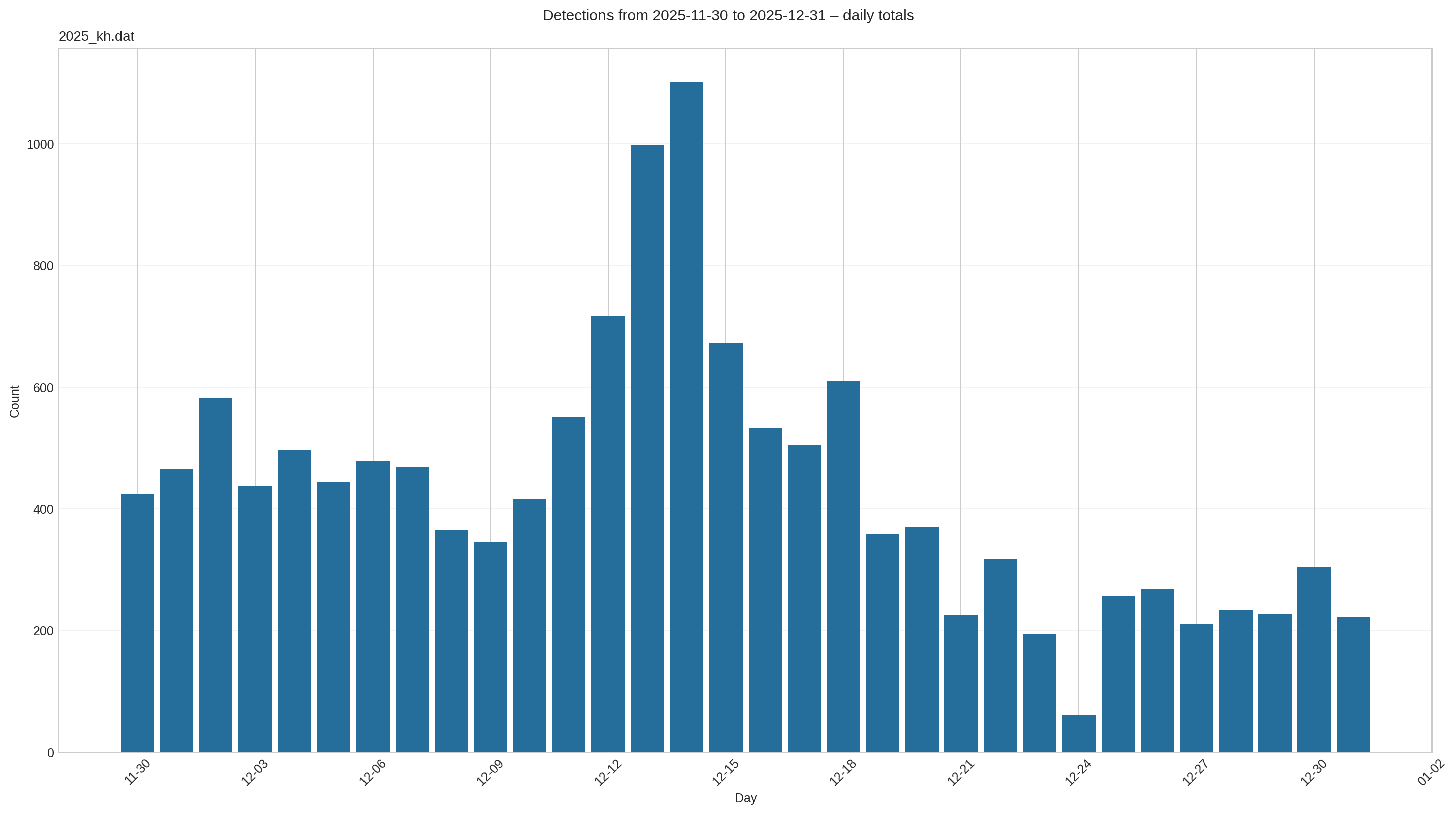
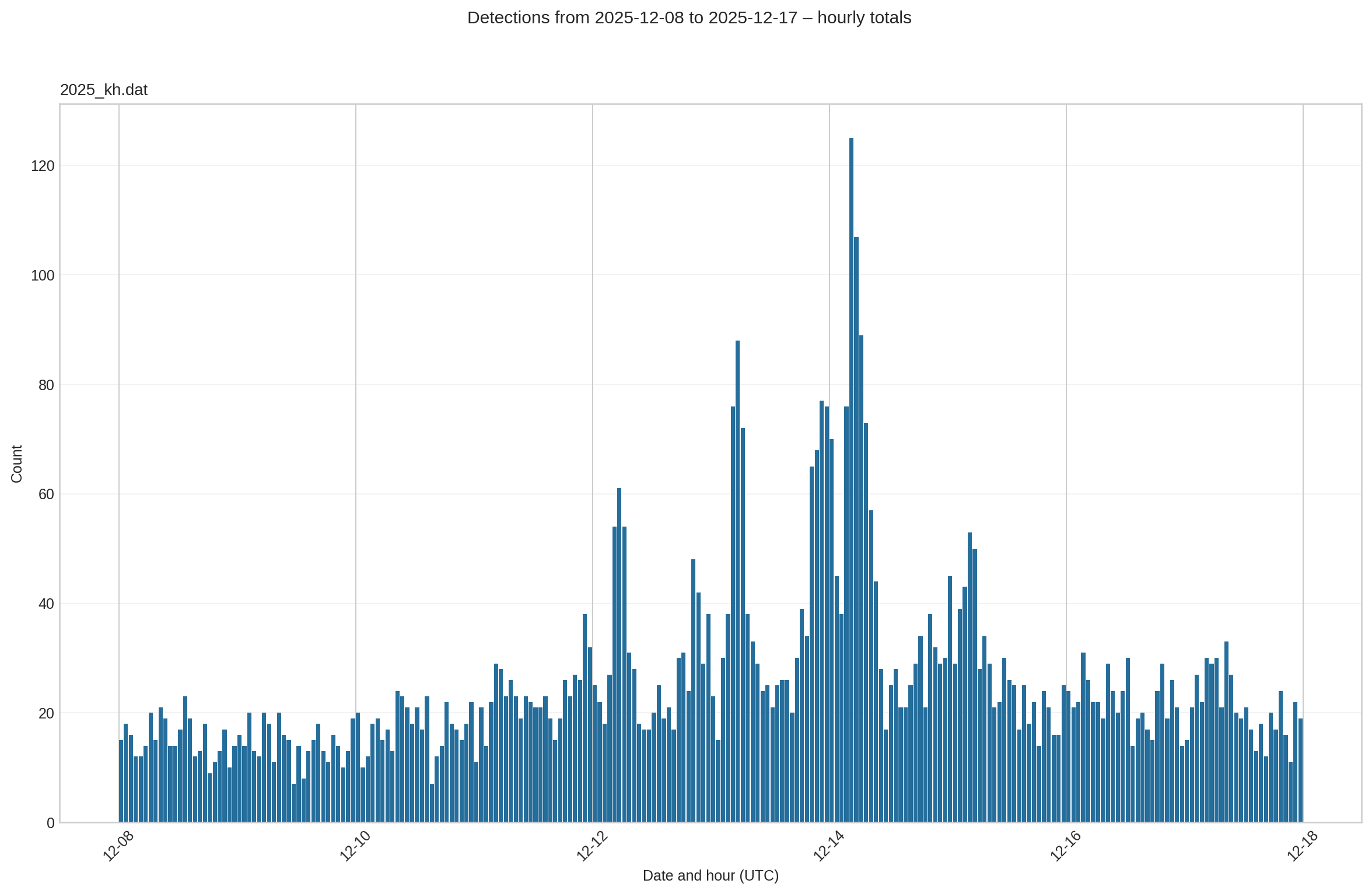
Geminids – December 2025
The Geminid meteor shower was clearly detected in mid-December 2025. The observations show a distinct maximum around the expected peak of the shower, embedded within a broader period of enhanced meteor activity.
Quadrantids – January 2026
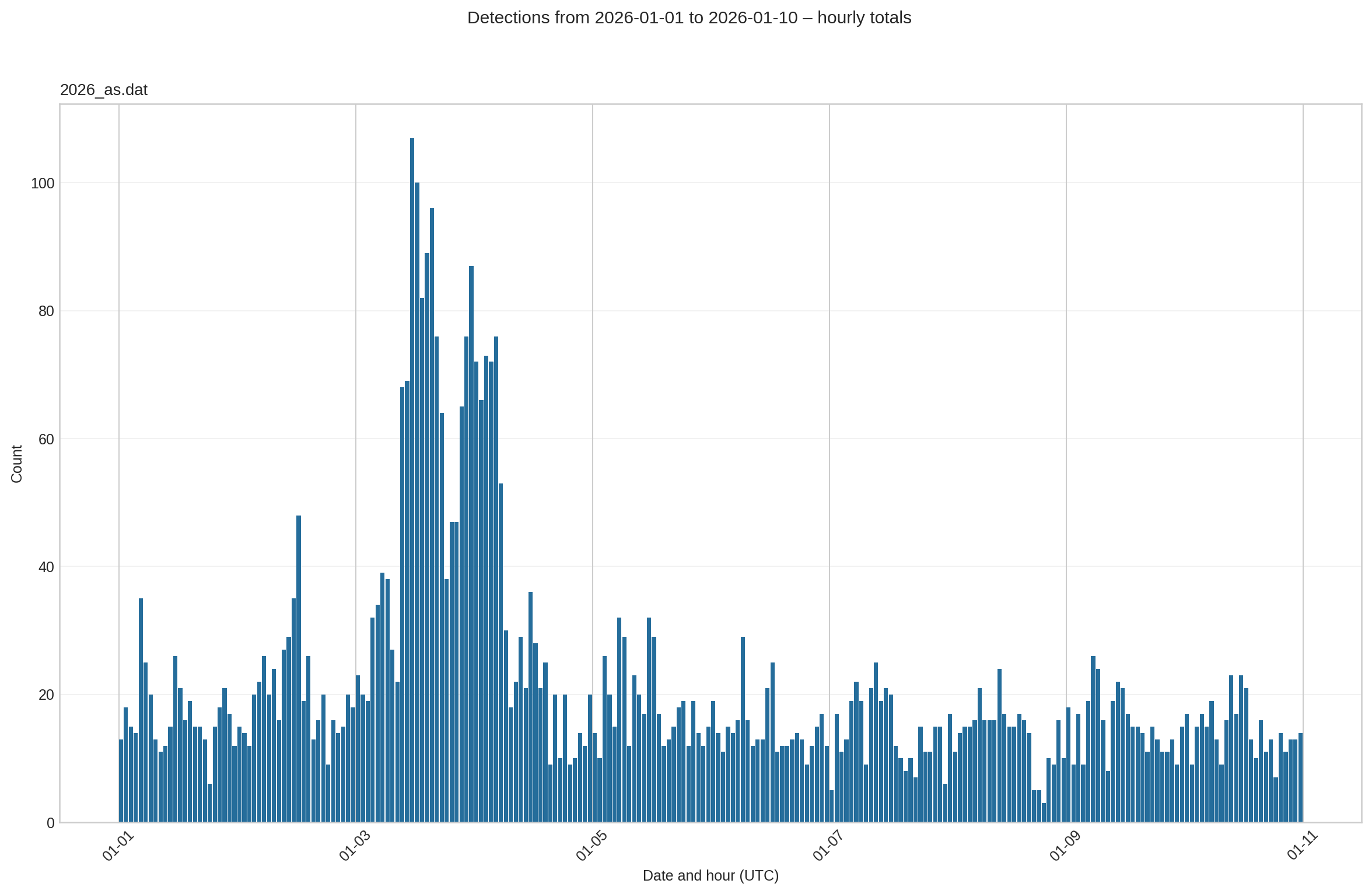
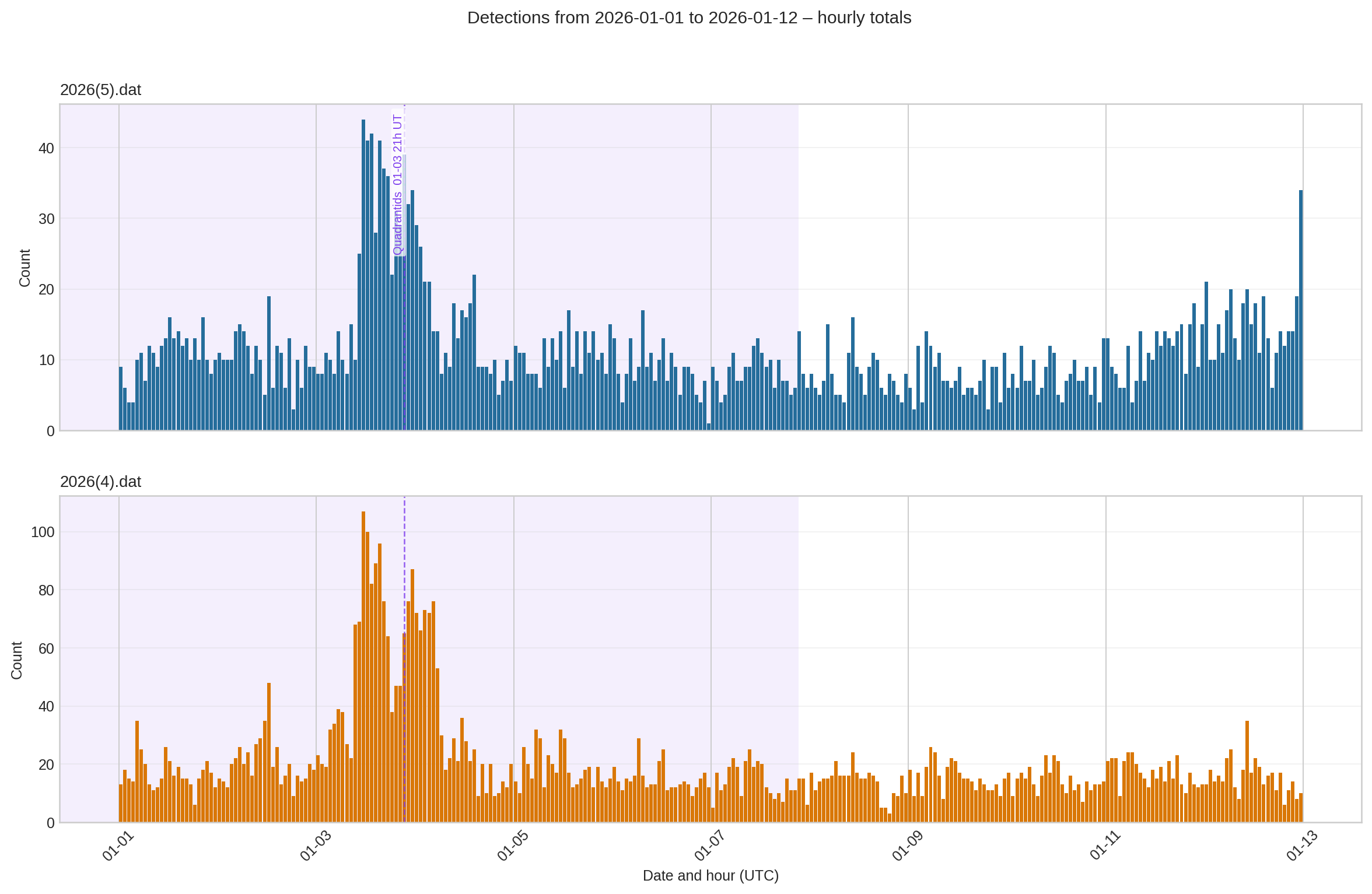
The Quadrantid meteor shower was successfully recorded in early January 2026. The results are presented in two different ways: as hourly meteor echo counts and as daily totals combining the detections from both antennas.
Unlike the Geminids and Perseids, the Quadrantids exhibit a particularly sharp and short-lived maximum, with activity concentrated within just a few days.
Eta Aquariids – May 2026
The Eta Aquariids are an annual meteor shower active from mid-April to late May, usually reaching their maximum around May 5–6. The meteoroids originate from the famous Halley’s Comet (1P/Halley). As the Earth passes through the debris left behind by the comet, these particles enter the atmosphere at high velocities of approximately 66 km/s. The shower is named after the star Eta Aquarii in the constellation Aquarius, near its apparent radiant.
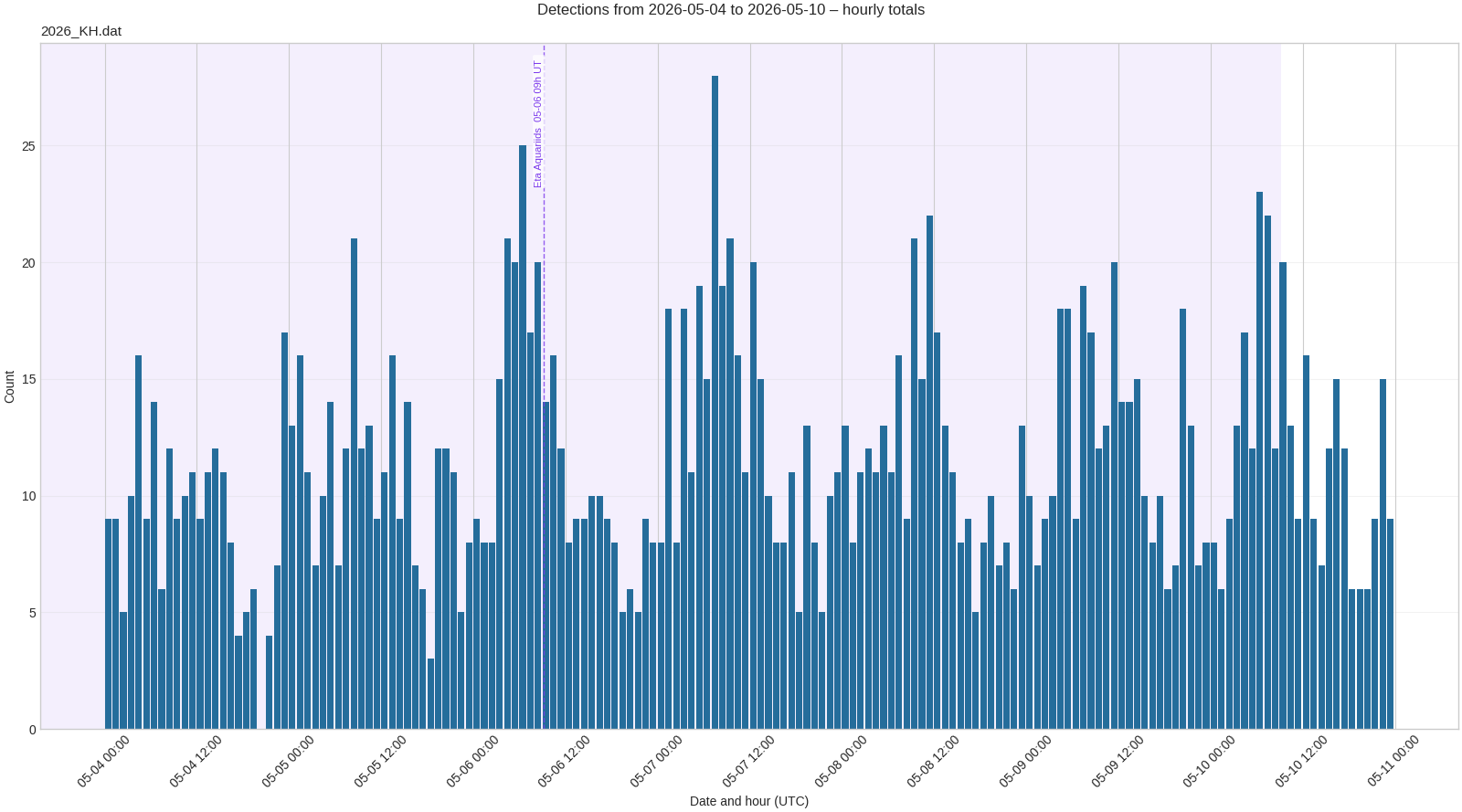
The chart shows our meteor scatter observations of the Eta Aquariids in May 2026, recorded from Berlin using a 3-element Yagi antenna directed southwest. The observations were carried out using radio signals from the French GRAVES radar, reflected by ionized meteor trails.
A slight, almost inconspicuous increase in meteor activity can be seen between May 6 and 7, 2026, around the expected maximum of the Eta Aquariids. Although the peak is relatively weak and difficult to distinguish from the background activity, it is consistent with the expected timing of this meteor shower.
Daytime Arietids and Zeta Perseids – June 2026
The Daytime Arietids and Daytime Zeta Perseids are two annual meteor showers that occur between May and July. Both showers have radiants located relatively close to the Sun, making them extremely difficult to observe visually. However, radio astronomy provides an excellent method for detecting these daytime meteor showers, as meteor scatter observations can be carried out independently of daylight and weather conditions.
The Daytime Arietids are among the strongest daytime meteor showers, reaching their maximum around June 7, 2026. The Daytime Zeta Perseids reach their maximum shortly afterwards, around June 9, 2026. Since both showers occur at nearly the same time, their activity periods overlap considerably, making it difficult to distinguish their individual contributions in radio observations.
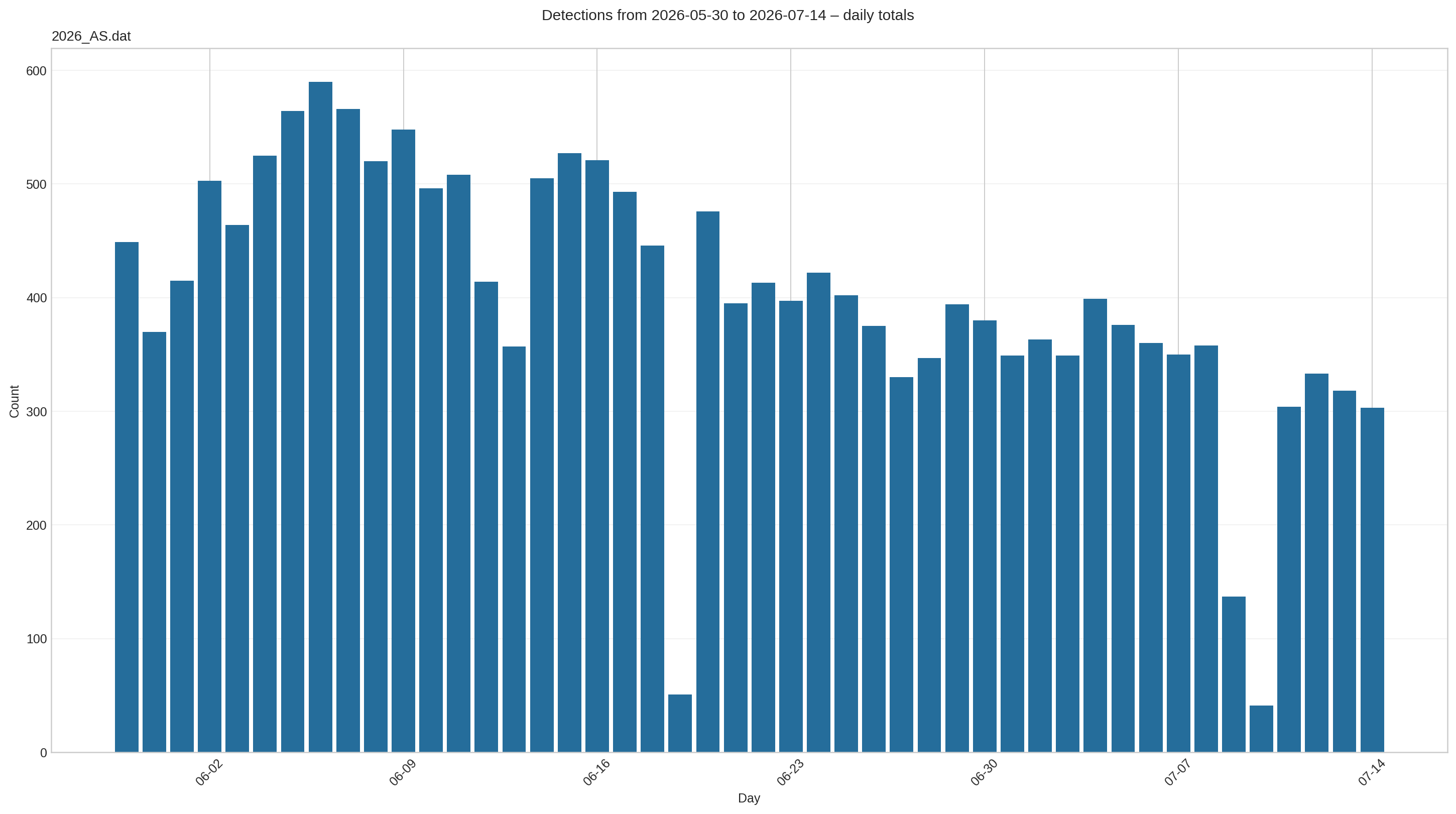
The chart shows our meteor scatter observations from late May to mid-July 2026, recorded from Berlin using a 3-element Yagi antenna and radio signals from the French GRAVES radar.
A pronounced increase in meteor activity can be observed during the first half of June, with the highest detection rates occurring around June 6–9, 2026. This broad maximum is consistent with the overlapping activity of the Daytime Arietids and Zeta Perseids.
These observations demonstrate how radio meteor scatter techniques allow us to detect meteor showers that remain almost completely invisible to optical observers. However, the individual contributions of the two showers cannot be reliably separated from the total meteor echo counts alone.
Perseids – August 2026
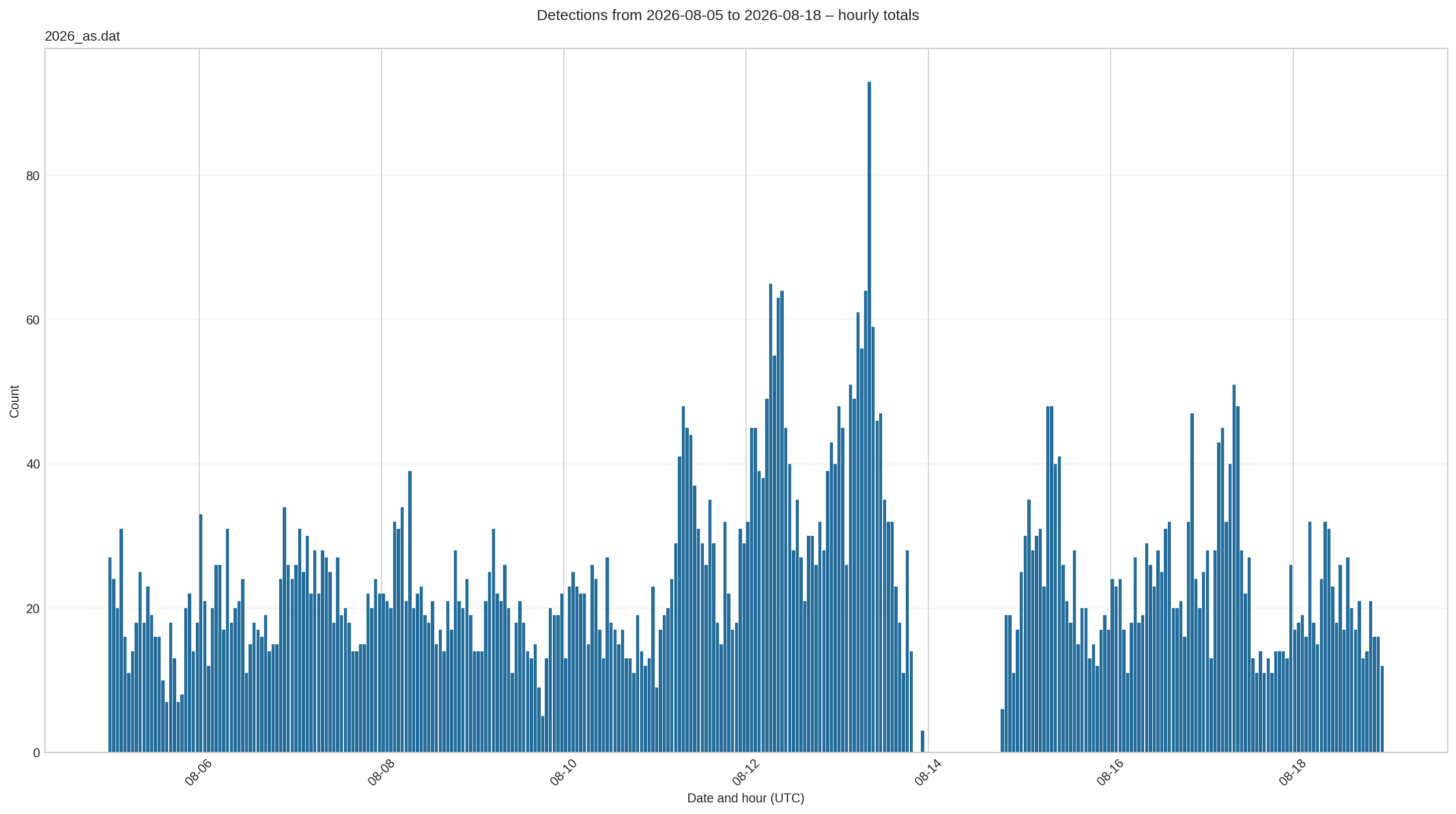
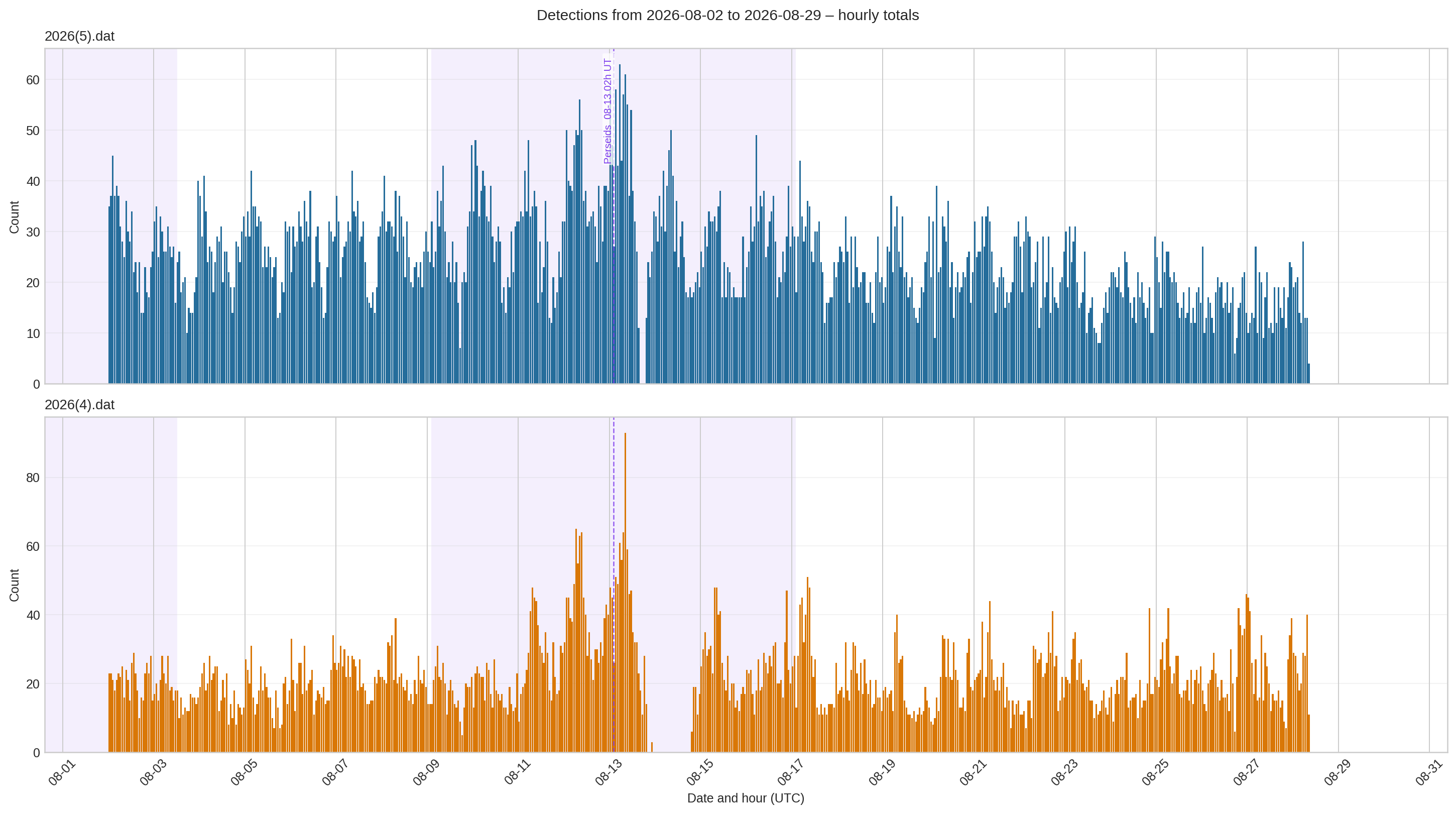
In August 2026, we successfully detected the Perseid meteor shower. The observations reveal a gradual increase in meteor activity over approximately three days, culminating in a clear maximum on August 12.
As with the Geminids, the Perseid maximum is embedded within a longer period of elevated meteor activity, in contrast to the much narrower peak observed during the Quadrantids.
Leonids – November 2026
The Leonids are an annual meteor shower active from early to late November, usually reaching their maximum around November 17–18. The meteoroids originate from Comet 55P/Tempel–Tuttle, which orbits the Sun approximately every 33 years. The Leonids are particularly famous for producing spectacular meteor storms in certain years, with thousands of meteors visible per hour. Their particles enter the Earth’s atmosphere at exceptionally high velocities of approximately 71 km/s, making them one of the fastest known meteor showers. The radiant is located in the constellation Leo.
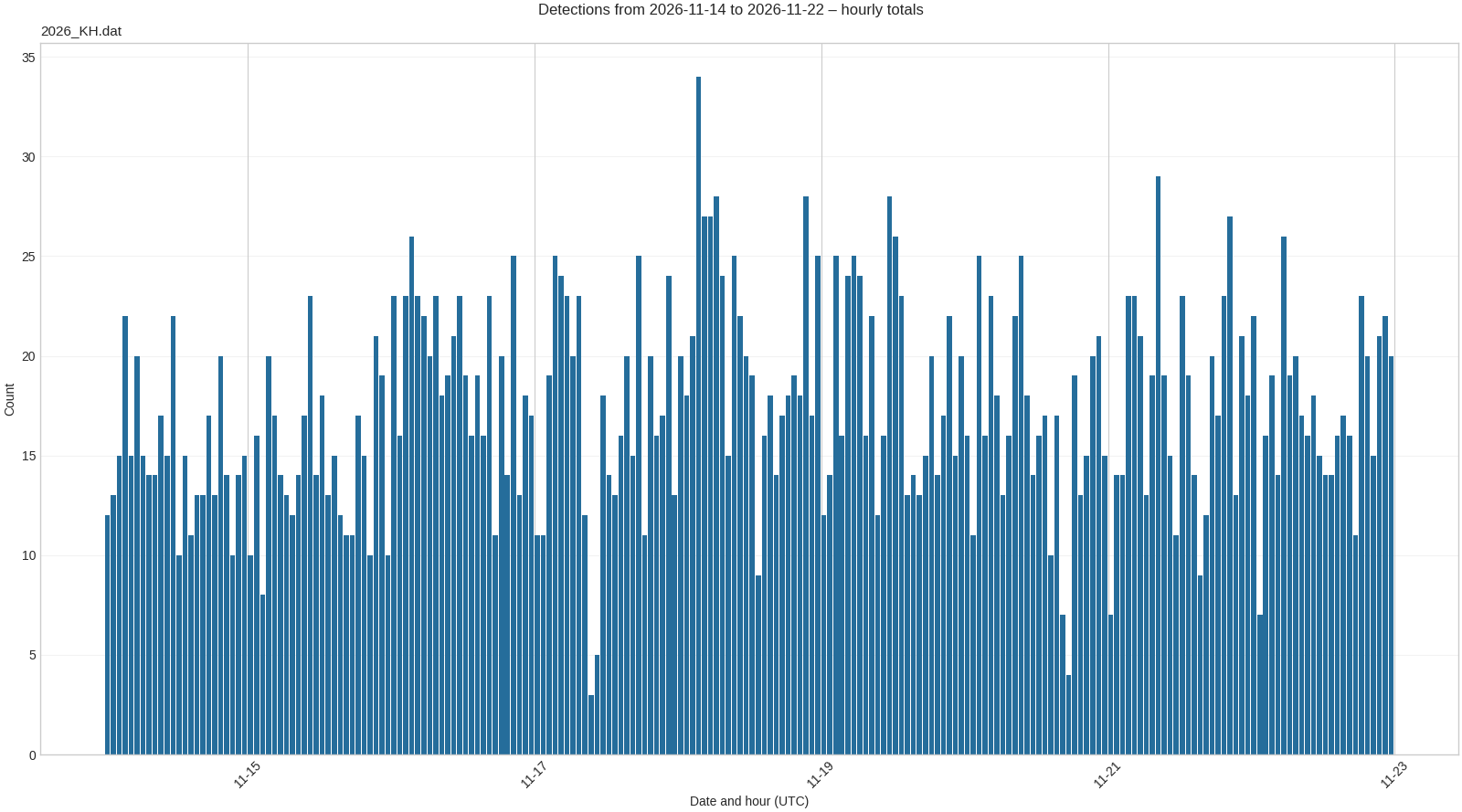
The chart shows our meteor scatter observations of the Leonids in November 2026, recorded from Berlin using a 3-element Yagi antenna and radio signals from the French GRAVES radar.
The observations cover the period from November 14 to 22, 2026, with meteor detections recorded as hourly totals. A noticeable increase in activity can be seen around November 17–18, with the highest hourly detection rate occurring on November 18, reaching approximately 34 detections per hour.
Although the Leonid maximum is not particularly pronounced against the background activity, the increased detection rates around the expected peak are consistent with the annual Leonid meteor shower. However, the hourly counts alone do not allow all individual detections to be attributed specifically to the Leonids.
These observations demonstrate how radio meteor scatter techniques can detect relatively modest increases in meteor activity, even when a meteor shower does not produce a spectacular visual display.
Continuing Observations
These results demonstrate that even a relatively simple radio receiving system can reliably detect major meteor showers and reveal differences in their activity profiles.
We will continue monitoring meteor activity throughout the year and regularly publish additional results, including observations of other meteor showers, on this page.