Ground Stations for Satellites
Many of us are fascinated by the rings of Saturn; anyone who has ever glimpsed them with their own eyes through a telescope never forgets that moment. However, did you know that Earth also has a ring? It is a “technology ring” comprised of thousands of satellites. You can see evidence of this simply by looking at the satellite dishes on households—notice how they all point toward the same geostationary arc in the sky.
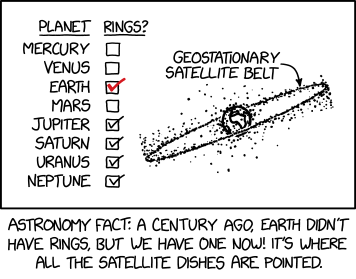
At RSI, we don’t just look into deep space; we also observe the technological ring of our own planet. Beyond the well-known TV satellites and famous Earth-observation platforms, there are many scientific and HAM (Amateur Radio) satellites in orbit broadcasting open data. This telemetry can consist of images, scientific measurements, or even voice transmissions. In fact, did you know you can listen to live transmissions from astronauts on the International Space Station (ISS)?
We operate several different ground stations for satellites across various frequency bands. Our stations capture the signals coming from these satellites, analyze them, and transmit the processed data to central databases. Scientists all over the world can then access this data, providing them with a more consistent connection to their spacecraft than they would have with their own proprietary ground stations alone.
Depending on the location of a ground station and the satellite’s orbit, a mission might only have a connection window for 1/10th of its orbit in Low-Earth-Orbit (LEO). By using a distributed network of these ground stations, enthusiasts like us help increase their total connection time dramatically.
As is the case with open data and open source, it isn’t just the satellite owners who benefit; everyone can access this telemetry and learn from it. You can find a comprehensive list of these small satellites at nanosats.eu.
CubeSats
Take, for example, this fascinating piece of technology called Fox-1A, a “CubeSat” measuring just 10x10x10 cm. Produced by HAM operators and launched in 2015, this satellite has been used by thousands of radio operators worldwide to communicate.
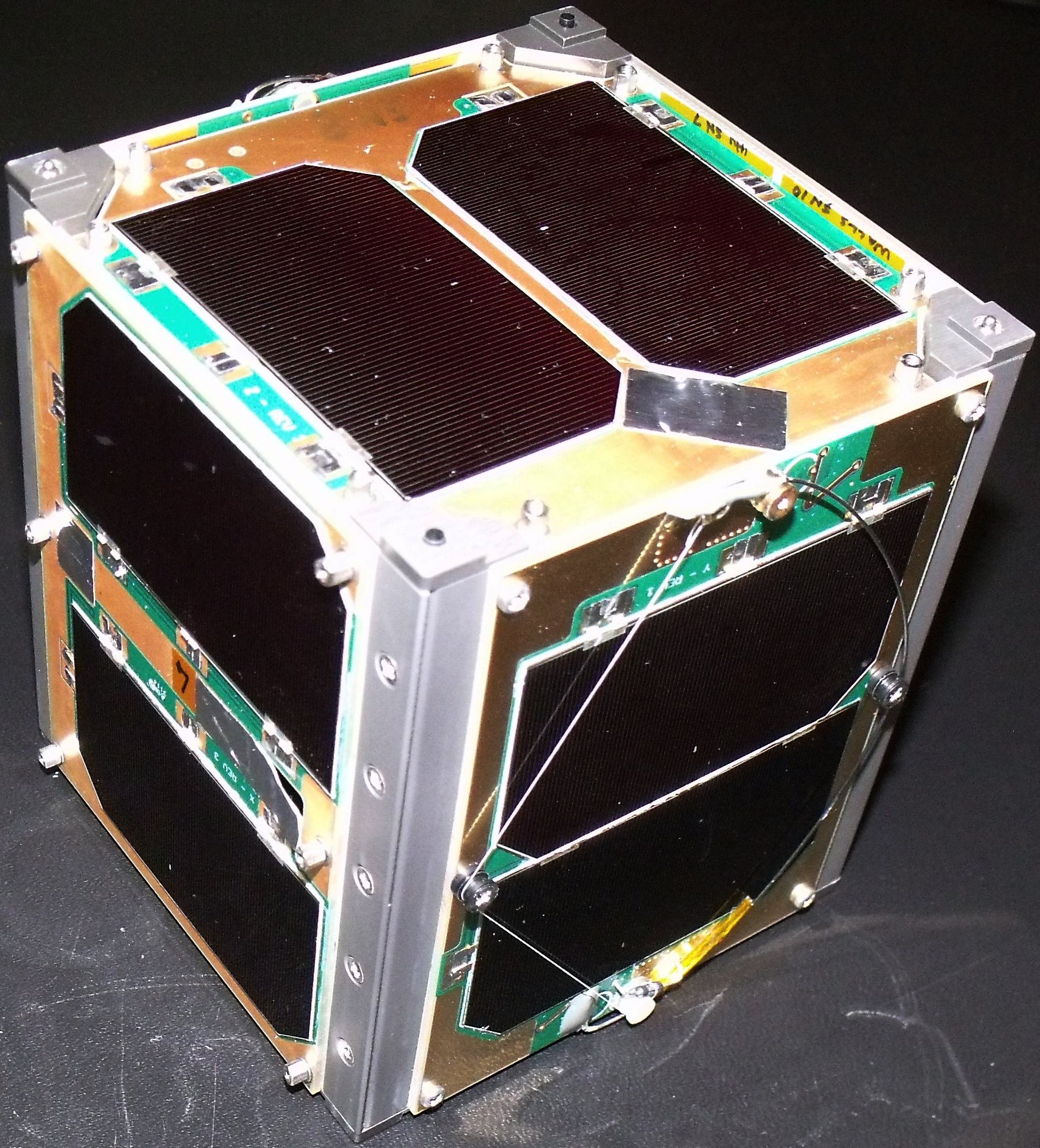
Beyond the voice relay, the satellite also broadcasts health telemetry, such as battery levels and temperatures. Monitoring these statistics helps enthusiasts and engineers understand how the hardware behaves in the vacuum of space. You can see live telemetry data here.
International Space Station (ISS)
In addition to these small satellites, you can also listen to astronauts on the ISS. Many astronauts are certified HAM operators and, in their spare time, they use the onboard station to stay in contact with operators all around the globe.
There is also an official scheduled event program called ARISS. Through this program, students can train and prepare for a 10-minute direct radio contact with an astronaut to ask questions about life in space.
Here is an example of a contact with Astro Jeanette:
With ground stations like ours, we can listen live to these transmissions. Below are two examples from the SatNogs network—while not from our specific station, they are part of the same global network: Ignacio Mazzitelli and gpagliaroli.
More Resources
Do you want to know how many rocket launches we have:
You can find more detailed information on our specific setups here: